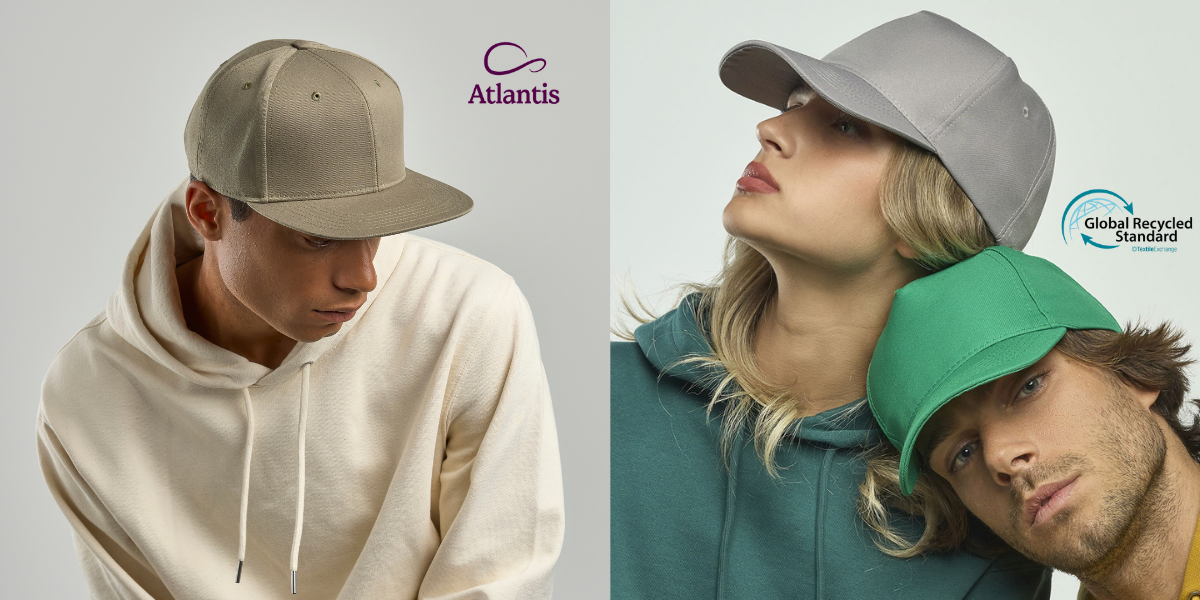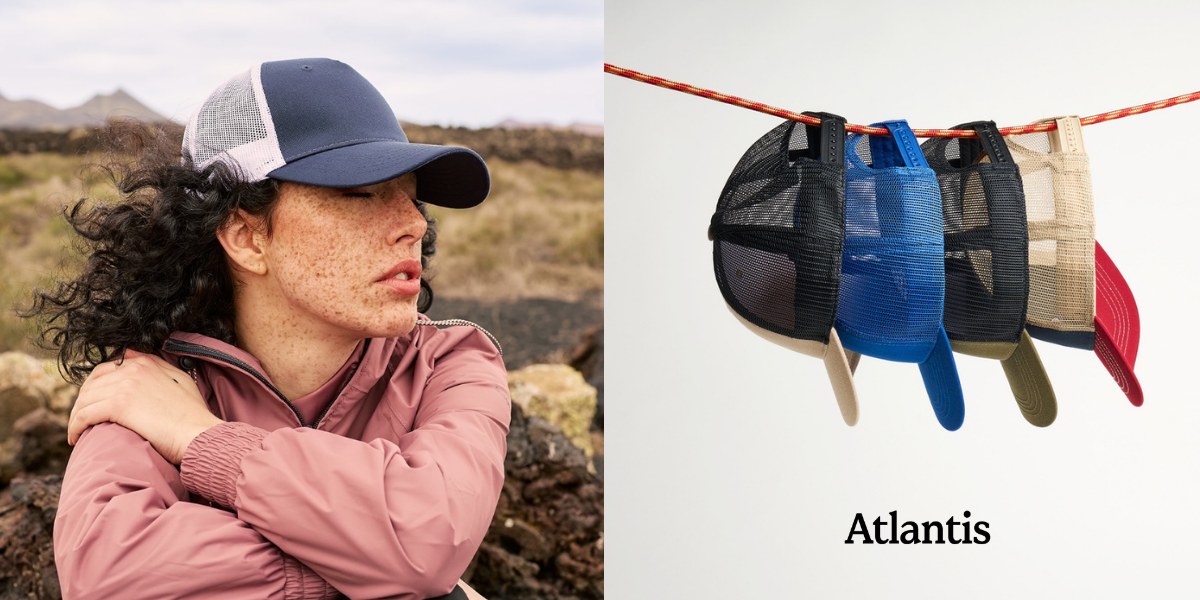








The guarantee of sustainability and style in the headwear industry.
Recycled Polyester from Textile Waste
Recycled polyester from bottles is not the only alternative to virgin polyester nor the best solution overall. Textile Exchange identifies the transition to “textile-to-textile” recycling as one of the fundamental steps to ensure the future supply of raw materials and promote circularity in the fashion industry.
For this reason, with the 2025 collection, we will introduce polyester derived from textile waste (textile-to-textile) into our offering. In this case, waste materials are chemically treated to be converted into dimethyl terephthalate (DMT), a monomer very similar to virgin polyester. This process involves the use of solvents and other substances that must be managed according to the highest health and safety standards to avoid negative impacts on the environment and people⁷.
Fibers obtained from chemical recycling – unlike mechanical recycling – have higher quality and can be recycled multiple times, contributing to the creation of a virtuous system where fabric returns to fabric instead of ending up in landfills. This is known as “closed-loop” recycling, a process in which the waste to be recovered is collected and processed to manufacture the same product from which it is derived.
Our Commitment to Preferred Polyester
Polyester is a fundamental fiber in our collections and one of the most used in the world: strong, durable, and wrinkle-resistant, it allows us to create lightweight hats that dry quickly. Additionally, unlike cotton, it does not fade or lose quality when exposed to the sun, which increases its durability. However, its production has a significant environmental cost: virgin polyester is a synthetic fiber derived from petroleum that requires a lot of energy to produce¹.
For this reason, over the years we have sought alternative solutions that would allow us to reduce dependence on fossil raw materials and increasingly move towards environmentally friendly materials (so-called preferred).
Among these is certainly recycled polyester (or rPET), a type of synthetic fiber that can be obtained through raw materials such as post-consumer PET plastic bottles, polyester fabrics and clothing, pre-consumer industrial waste, PET plastic packaging, and even fishing nets and plastic materials recovered from the oceans. These materials are then processed through mechanical or chemical processes to be transformed into new polyester products.
Recycled Polyester from Bottles
To date, the most widespread type of recycled polyester³ is the one obtained through the recycling of PET bottles.
The method to create this type of fiber is mechanical: plastic bottles are collected, washed, and reduced into small fragments that are then converted into polyester granules to be transformed into textile fibers. It is an abrasive process that requires a limited use of water and energy⁴ and brings environmental benefits compared to the production of virgin polyester.
Our LCA⁵ study conducted on polyester products has shown, for example, that by replacing virgin polyester with recycled polyester, we reduce CO₂e emissions by 4%, and if we replace acrylic, we achieve a reduction of almost 70%.
However, recycled polyester obtained through the recycling of plastic bottles has objective limits both in terms of performance and environmental impact. The quality of the fibers obtained is indeed lower than that of fibers produced from virgin polyester or textile fiber recycling⁶. Additionally, mechanical recycling releases microplastics in quantities similar to that of virgin plastic. Using plastic bottles is also a choice that does not favor circular economy processes in the textile sector, as it does not allow for the direct recycling of fibers to create new fibers, but is limited to transforming a single-use plastic product into a textile material.
Founded in 1988, Sportex Sales began as a trusted representative for apparel suppliers in Western Canada’s retail market. As the promotional advertising industry evolved, so did we. In the early 1990s, we shifted our focus to supplying screen printers, embroidery houses, and all promotional product companies with high-quality imprintable products. This strategic move positioned us at the forefront of the industry, allowing us to better serve businesses looking to elevate their brand presence.

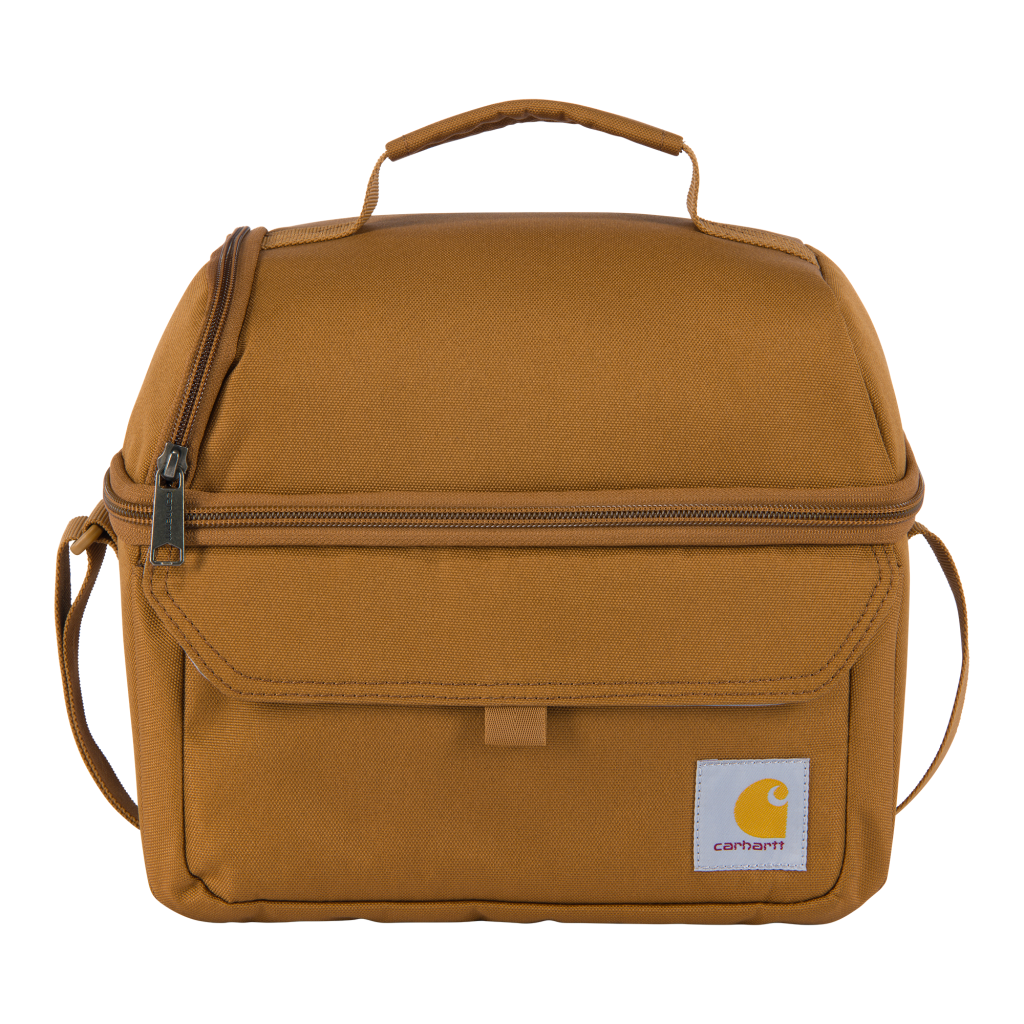
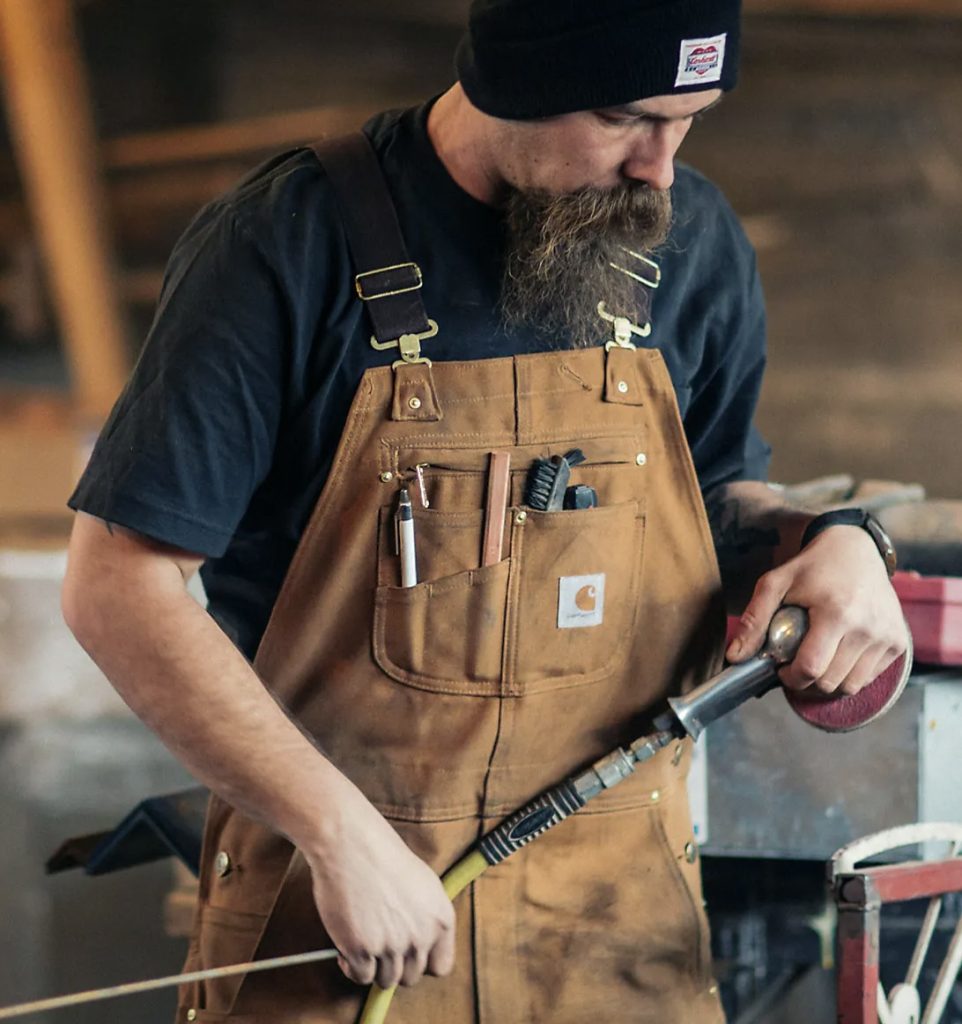
Carhartt gear bags are widely known for their exceptional strength and rugged durability, primarily designed to withstand the demands of tough worksite conditions and heavy use. This strength comes from a combination of heavy-duty materials, reinforced construction techniques, and thoughtful design features.
Carhartt Gearbags
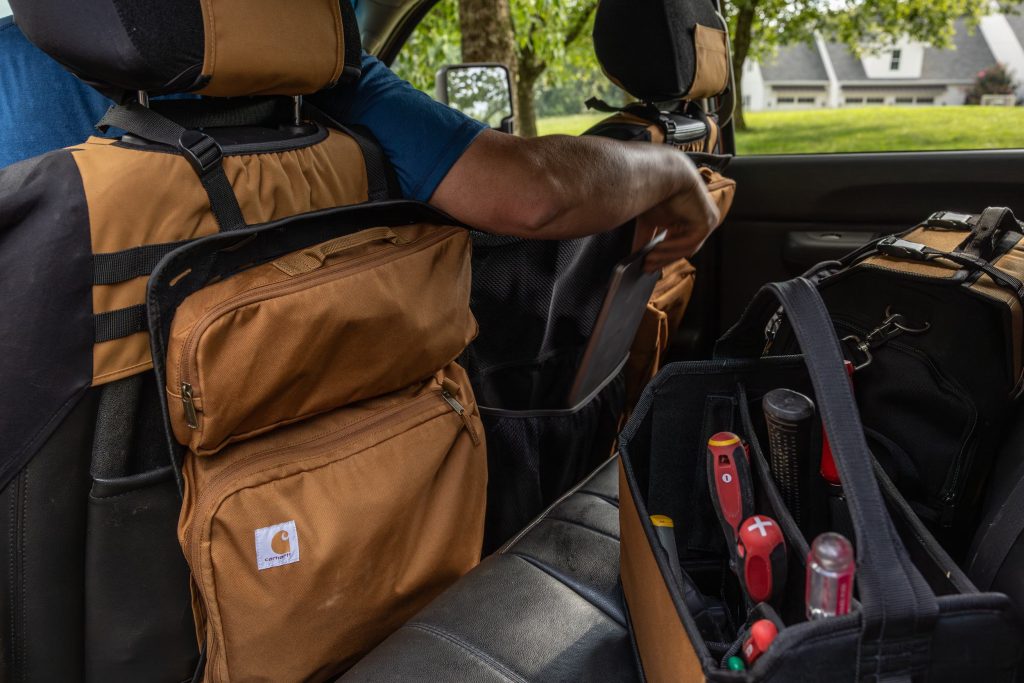
designed to withstand the demands

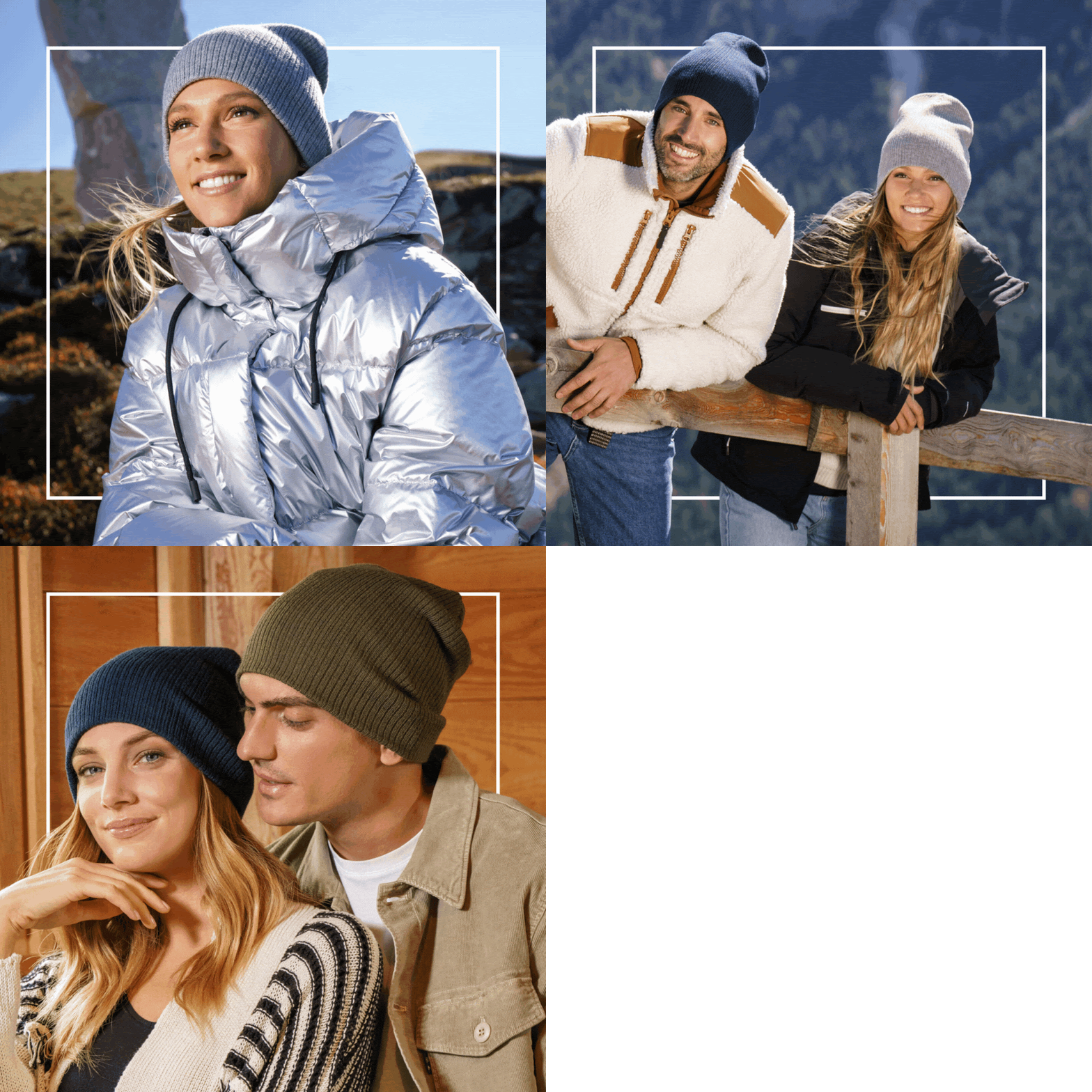
The sustainable revolution is on your head
Today, Sportex Sales takes pride in delivering exceptional customer service and maintaining the highest standards of ethical sales representation. Our commitment to customer focus and growth-driven strategies makes us a trusted partner for our suppliers. As part of our dedication to convenience and accessibility, we offer a comprehensive website for customer reference and a centrally located showroom in Calgary, AB—providing a hands-on experience with our extensive product offerings.

Sportex Sales is more than just a business—it’s a family venture built on passion, experience, and a dedication to exceptional service. Founded by two brothers, Rob and Claudio with over 50 years of combined sales experience, we bring a hands-on, personal touch to everything we do. Our customers aren’t just clients; they’re partners, and we take pride in building lasting relationships based on trust, quality, and attention to detail. From carefully selecting the best imprintable products to offering thoughtful, tailored service, we ensure every interaction feels like working with family.

Robert De Simone
Principal

Claudio De Simone
Partner
Shop our stocked collection at: